Text I Based on the text below, answer questions 1, 2 and 3.
Ships and seamanship
By Jan Bill
Although shipbuilding traditions in Viking-Age Scandinavia were not fundamentally different from those in other parts of northern Europe, archaeological evidence shows that Viking ships were lighter, slimmer, faster, and thus probably better sailers than the heavier vessels used by the English and, presumably, the Franks at that time.
There are two main reasons for these differences. The first is geographical. In Scandinavia waterways and access to the sea were more important factors in determining the location of settlements than they were in other parts of northern Europe. In Norway and Sweden most people lived near the coast or around large lakes, while the forests and mountains were very sparsely settled. Inland waterways were not only sheltered; they were also routes to the sea. No part of Viking-Age Denmark was far from the sea; it was virtually an archipelago, joined to the Continent by a narrow strip of land, and separated from the interior of the great Scandinavian peninsula by a deep barrier of forest. These natural features also meant that the authority of many rulers in Viking-Age Scandinavia, unlike that of their contemporaries in Europe, to a large extent depended on ships and control of the sea. The extensive empire that Danish kings ruled at the end of the eighth century was to a significant degree based on naval power.
The second reason is historical. Scandinavia was sufficiently remote from the Romans and, later, the Franks for its political and religious life to flourish relatively unaffected by the transformations that occurred in other parts of Europe in the first millennium AD. One feature that survived was the central role of the ship as both a religious and secular symbol, a role that is illustrated by the fact that Bronze-Age stone ship-settings and metal representations of ships were already well developed over a thousand years before Christ. The symbolic significance of ships naturally led to refinements in their construction: a fine ship conferred prestige on its owner. In the clash between Christian and Nordic culture that occurred in the Viking Age, ship burials were more frequent than they had previously been,
implying that ships had acquired even greater significance as a religious symbol, at least among the pagans who resisted the advance of the new religion.
The symbolic and practical importance of ships in early Scandinavian society resulted in such improvements in ship design that Scandinavians were well equipped in comparison with other north Europeans. The contrast was all the greater because in many parts of Europe one of the main functions of ships had long been to carry cargoes, a purpose for which speed and elegance were not highly prized qualities. On the Atlantic and the North Sea Viking ships met the same challenges as the ships of the English, Frisians, and Franks, but they did so for different reasons.
(From: The Oxford Illustrated History of the Vikings.)
In “On the Atlantic and the North Sea Viking ships met the same challenges as the ships of the English, Frisians, and Franks, but they did so for different reasons” the verb ‘met’ is the past tense of the verb ‘meet’. The verb ‘meet’ is an irregular verb. Choose the option that contains only irregular verbs:
A)fling, spread, wring, stick, slide.
B)pay, read, found, write, shrink.
C)run, find, catch, frighten, smite.
D)fold, forbid, rehear, stick, tread.
E)thrust, sweep, put, drown, dig.
EFOMM2025Dia 2Questao 1MatemáticaTeoria dos conjuntosDificil
Analise as afirmativas a seguir sobre operações de conjuntos.
I – (A−B)×C=(A×C)−(B×C).
II – A⊂D e B⊂E→A×B⊂D×E.
III – Se A,B⊂C; A∩B=∅ e A∪B=C→B=∁AC.
IV – (A−B)∪(B−A)=(A−C)∪(C−A)↔B=C.
(Considere A⊂B tal que todo elemento de A é elemento de B. Além disso, ∁AC é o complementar do conjunto A em relação ao conjunto C.)
Assinale a opção correta.
A)Apenas as afirmativas I, II e IV são verdadeiras.
B)Apenas as afirmativas I e III são verdadeiras.
C)Apenas as afirmativas II e IV são verdadeiras.
D)Apenas as afirmativas I, II e III são verdadeiras.
E)Apenas a afirmativa IV é verdadeira.
EFOMM2025Dia 1Questao 2InglêsInterpretação de textoMedia
Text I Based on the text below, answer questions 1, 2 and 3.
Ships and seamanship
By Jan Bill
Although shipbuilding traditions in Viking-Age Scandinavia were not fundamentally different from those in other parts of northern Europe, archaeological evidence shows that Viking ships were lighter, slimmer, faster, and thus probably better sailers than the heavier vessels used by the English and, presumably, the Franks at that time.
There are two main reasons for these differences. The first is geographical. In Scandinavia waterways and access to the sea were more important factors in determining the location of settlements than they were in other parts of northern Europe. In Norway and Sweden most people lived near the coast or around large lakes, while the forests and mountains were very sparsely settled. Inland waterways were not only sheltered; they were also routes to the sea. No part of Viking-Age Denmark was far from the sea; it was virtually an archipelago, joined to the Continent by a narrow strip of land, and separated from the interior of the great Scandinavian peninsula by a deep barrier of forest. These natural features also meant that the authority of many rulers in Viking-Age Scandinavia, unlike that of their contemporaries in Europe, to a large extent depended on ships and control of the sea. The extensive empire that Danish kings ruled at the end of the eighth century was to a significant degree based on naval power.
The second reason is historical. Scandinavia was sufficiently remote from the Romans and, later, the Franks for its political and religious life to flourish relatively unaffected by the transformations that occurred in other parts of Europe in the first millennium AD. One feature that survived was the central role of the ship as both a religious and secular symbol, a role that is illustrated by the fact that Bronze-Age stone ship-settings and metal representations of ships were already well developed over a thousand years before Christ. The symbolic significance of ships naturally led to refinements in their construction: a fine ship conferred prestige on its owner. In the clash between Christian and Nordic culture that occurred in the Viking Age, ship burials were more frequent than they had previously been,
implying that ships had acquired even greater significance as a religious symbol, at least among the pagans who resisted the advance of the new religion.
The symbolic and practical importance of ships in early Scandinavian society resulted in such improvements in ship design that Scandinavians were well equipped in comparison with other north Europeans. The contrast was all the greater because in many parts of Europe one of the main functions of ships had long been to carry cargoes, a purpose for which speed and elegance were not highly prized qualities. On the Atlantic and the North Sea Viking ships met the same challenges as the ships of the English, Frisians, and Franks, but they did so for different reasons.
(From: The Oxford Illustrated History of the Vikings.)
Choose the correct option according to the text:
A)The vessels used by the English were slenderer than Viking ships.
B)The pagans ruled out the ship as a religious symbol.
C)Access to the sea was disregarded when deciding on settlement locations.
D)Natural features had a detrimental impact on seamanship.
E)Mountains were scantly occupied in Norway and Sweden.
Sejam os conjuntos naturais:
A={neˊ primo;2≤n≤36};
B={neˊ muˊltiplo de 3;10≤n≤36};
C=A×B.
Quantos elementos possui o conjunto
D={(a,b)∈C;a+beˊ par} ?
A)20
B)40
C)44
D)45
E)55
EFOMM2025Dia 2Questao 3MatemáticaFunçõesDificil
Dadas as funções f e g definidas abaixo:
f:R→R,f(x)=x2+5, com o gráfico de f restrito ao conjunto B×C tal que B={x∈R;∣x∣≥3} e C={y∈R;∣y∣≤30};
g:R→R,g(x)=x2, com o gráfico de g restrito ao conjunto B×D tal que B={x∈R;∣x∣≥3} e D={y∈R;∣y∣≤25}.
Calcule a área entre elas.
A)18 u.a.
B)20 u.a.
C)24 u.a.
D)28 u.a.
E)36 u.a.
EFOMM2025Dia 1Questao 3InglêsVocabulárioMedia
Text I Based on the text below, answer questions 1, 2 and 3.
Ships and seamanship
By Jan Bill
Although shipbuilding traditions in Viking-Age Scandinavia were not fundamentally different from those in other parts of northern Europe, archaeological evidence shows that Viking ships were lighter, slimmer, faster, and thus probably better sailers than the heavier vessels used by the English and, presumably, the Franks at that time.
There are two main reasons for these differences. The first is geographical. In Scandinavia waterways and access to the sea were more important factors in determining the location of settlements than they were in other parts of northern Europe. In Norway and Sweden most people lived near the coast or around large lakes, while the forests and mountains were very sparsely settled. Inland waterways were not only sheltered; they were also routes to the sea. No part of Viking-Age Denmark was far from the sea; it was virtually an archipelago, joined to the Continent by a narrow strip of land, and separated from the interior of the great Scandinavian peninsula by a deep barrier of forest. These natural features also meant that the authority of many rulers in Viking-Age Scandinavia, unlike that of their contemporaries in Europe, to a large extent depended on ships and control of the sea. The extensive empire that Danish kings ruled at the end of the eighth century was to a significant degree based on naval power.
The second reason is historical. Scandinavia was sufficiently remote from the Romans and, later, the Franks for its political and religious life to flourish relatively unaffected by the transformations that occurred in other parts of Europe in the first millennium AD. One feature that survived was the central role of the ship as both a religious and secular symbol, a role that is illustrated by the fact that Bronze-Age stone ship-settings and metal representations of ships were already well developed over a thousand years before Christ. The symbolic significance of ships naturally led to refinements in their construction: a fine ship conferred prestige on its owner. In the clash between Christian and Nordic culture that occurred in the Viking Age, ship burials were more frequent than they had previously been,
implying that ships had acquired even greater significance as a religious symbol, at least among the pagans who resisted the advance of the new religion.
The symbolic and practical importance of ships in early Scandinavian society resulted in such improvements in ship design that Scandinavians were well equipped in comparison with other north Europeans. The contrast was all the greater because in many parts of Europe one of the main functions of ships had long been to carry cargoes, a purpose for which speed and elegance were not highly prized qualities. On the Atlantic and the North Sea Viking ships met the same challenges as the ships of the English, Frisians, and Franks, but they did so for different reasons.
(From: The Oxford Illustrated History of the Vikings.)
In what option the word ‘fine’ is used with the same meaning as in “[…] a fine ship conferred prestige on its owner.” Choose the correct option.
A)She has inherited her mother’s fine features.
B)Offenders will be liable to a heavy fine.
C)I was feeling fine when I got up this morning.
D)They have a well-stocked cellar full of fine wines.
Determine o volume do paralelepípedo com base quadrada, dadas as seguintes condições:
Uma pirâmide com base quadrada está completamente contida no paralelepípedo, coincidindo sua base com a base inferior do paralelepípedo. A projeção do vértice da pirâmide coincide com os centros dos quadrados das bases do paralelepípedo. O volume da pirâmide é de 5m3.
Um cone está contido no paralelepípedo, com vértice comum a pirâmide, e sua base está inscrita na base superior do paralelepípedo. O volume do cone é 4m3.
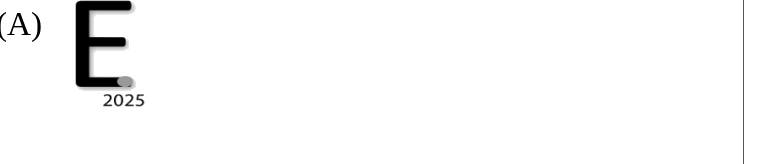
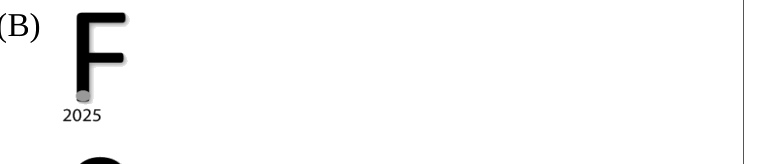
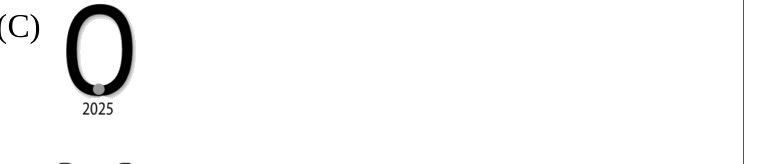
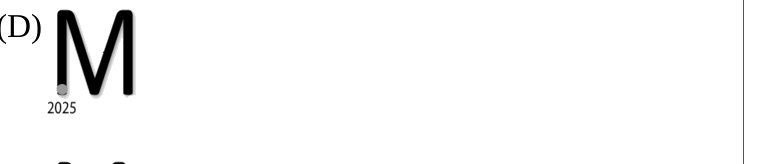
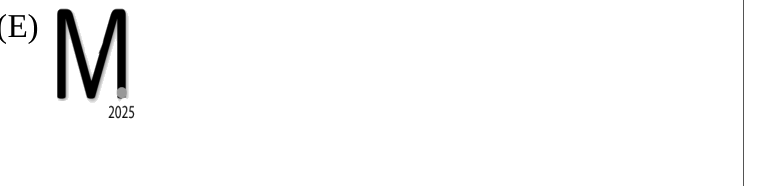
Observe as três progressões aritméticas com os primeiros termos 5, 8 e 10, construídas a partir da letra E da sigla da Escola de Formação de Oficiais da Marinha Mercante (EFOMM).
Quando as letras da sigla se esgotam, a sequência retorna à primeira letra. Continuando esse padrão, determine a posição do número 2025 na sequência.
Imagens anexadas
A)
B)
C)
D)
E)
EFOMM2025Dia 1Questao 6InglêsPreposiçõesFacil
Which option is correct to complete the sentences below? I- Therapy is good _________ life. II- She doesn’t seem attractive ________ him. III- Kindness is important ________ a public person. IV- I’ll be there ____________ May 21st. V- Summer starts ___________ December in Brazil.
No Presarium Militares, você resolve essas questões com correção na hora, comentário e um painel que cruza a incidência com o seu desempenho — e monta sua lista de prioridade automaticamente.